
The best eco-friendly gifts fall into three categories: everyday-swap starter kits, durable or upcycled goods with real certifications, and experiences or subscriptions that skip physical waste altogether. A gift earns its “sustainable” label when it’s built to last, uses repairable or refillable parts, ships in low-waste packaging, and backs up its claims with something concrete, like a certification or a tree-planting program. What follows are budgeted picks by recipient, three ready-made kit templates, and a packaging checklist so the wrapping doesn’t undo the good the gift is doing.
TL;DR:
- Reusable gifts like beeswax wraps and bamboo utensils can divert hundreds of pounds of plastic waste annually with minimal investment.
- Durable and upcycled items, such as reclaimed wood cutting boards and recycled glassware, avoid quick disposal and provide long-term use, justifying higher upfront costs.
- Experience-based gifts like garden memberships or cooking classes generate zero waste and can be personalized with a simple story card for added meaning.
- Packaging choices should be recycled, compostable, or reusable, with verified impact claims and clear origin stories to prevent greenwashing.
- Curated gift kits, including starter sets with item origin details, offer a memorable, waste-free alternative to loose or trendy products.
Table of Contents
- Eco-Friendly Gift Ideas Organized by Category
- Eco-Friendly Gift Ideas by Recipient and Budget
- Build Your Own Eco-Friendly Gift Kit
- Experience Gifts That Skip the Waste Entirely
- Sustainable Packaging: What to Check and What to Avoid
- Comparing the Real Impact of Different Eco-Friendly Gifts
- Why I Favor Durable, Story-Rich Gifts Over Trend Items
- A Candle Gift That Actually Lasts
- Sources
- FAQ
Eco-Friendly Gift Ideas Organized by Category
Not every “green” gift does the same job. Some replace disposable habits, some just last longer than the fast-consumer version, and some rely on smarter materials entirely. Knowing which bucket you’re shopping in makes the decision faster.
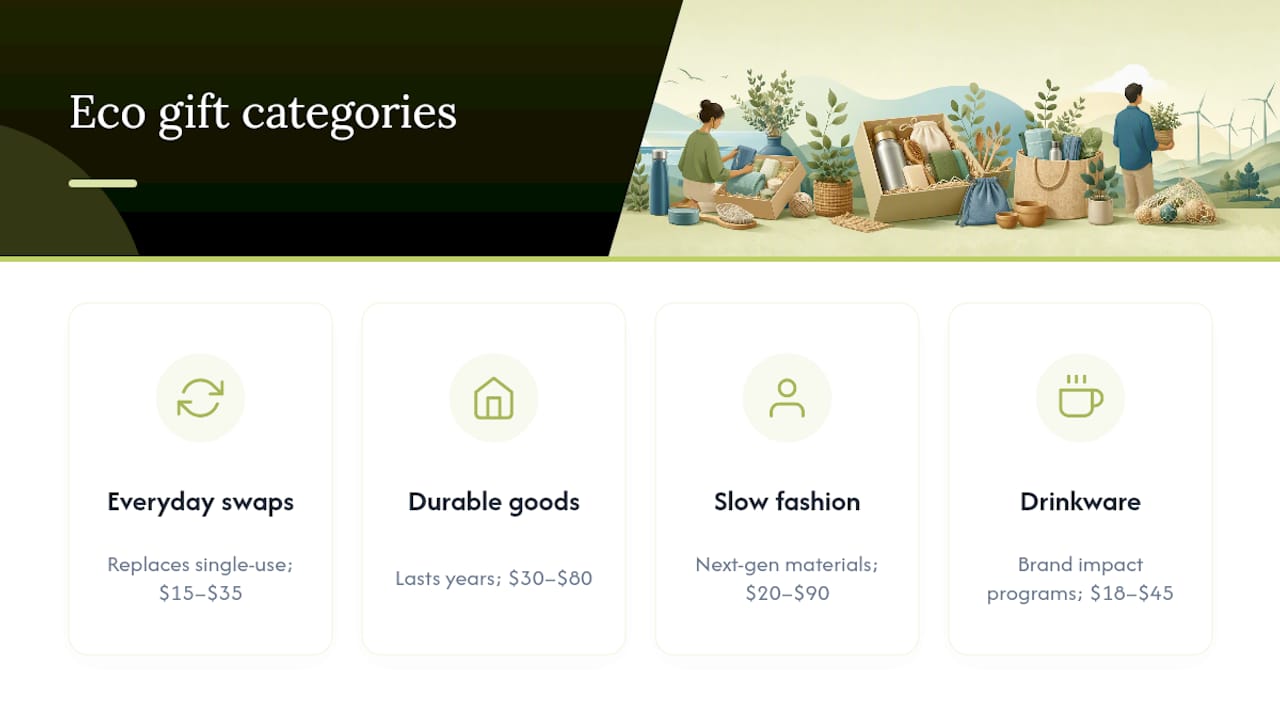
Everyday-swap kits target single-use waste directly. Beeswax wraps, reusable cutlery sets, and bamboo toothbrushes replace something the recipient already throws away weekly. One ocean-cleanup brand, 4ocean, reports diverting roughly 2 tons of plastic through plastic-free product lines like these, which is the kind of proof point that separates a real swap from a gimmick. Budget: $15 to $35.
Durable home goods and upcycled items last years instead of months. Reclaimed wood cutting boards, recycled glass tumblers, and coconut shell bowls all avoid the fast-consumer discard cycle, and heirloom-quality materials like these are built specifically to skip future replacement, according to The Reclaimed World’s take on slow fashion and reclaimed wood. Budget: $30 to $80.
Personal care and slow fashion items increasingly use next-generation materials. Mango-leather wallets, seaweed-blend apparel, and organic cotton basics fit here. Seaweed fiber is worth watching specifically: it can capture significantly more carbon per acre than land forests, and blends made from it are showing up in temperature-regulating clothing. Look for GOTS or Fair Trade labels here. Budget: $20 to $90.
Reusable drinkware rounds out the list, especially when the brand backs it with an impact model. Woodchuck USA has planted over 1 million trees through its buy-one-plant-one program, which is the kind of verifiable claim to look for over vague “eco” marketing. Budget: $18 to $45.
Eco-Friendly Gift Ideas by Recipient and Budget
Matching the gift to the person matters more than matching it to a trend. Here’s how to shop five common recipient types across three price tiers.
- Coworkers. Under $20: a bamboo desk organizer or seed-paper notebook. $20 to $40: an insulated tumbler with a tree-planting tie-in. Higher-priced options include a reclaimed-wood desk tray. Buying cue: look for FSC-certified wood.
- Parents. Under $25: organic cotton socks or a beeswax wrap set. $25 to $60: a coconut-bowl serving set or a hand-poured soy candle. Higher-priced options include a reclaimed-wood serving board with a story card about its origin. Buying cue: check for GOTS certification on textiles.
- Kids and teens. Under $15: a reusable silicone snack pouch. $15 to $35: a bamboo bike accessory or a seaweed-blend backpack patch kit. Higher-priced options include a refurbished or upcycled skateboard deck. Buying cue: look for non-toxic, water-based dyes.
- Homebodies and hosts. Under $25: beeswax wraps or a bamboo dish brush set. $25 to $50: a soy candle with clean-burning wax. $50 and up: a set of recycled glass tumblers. Buying cue: 100% soy or coconut wax over paraffin.
- Outdoor enthusiasts. Under $20: a mango-leather carabiner pouch. $20 to $50: an insulated stainless tumbler. Higher-priced options include a membership to a botanical garden or national park pass. Buying cue: certified recycled stainless steel.
A handwritten story card explaining why you picked the item takes any of these from “nice” to genuinely personal, and swapping in a refillable version whenever one exists adds another year or two of use before it hits the trash.
Build Your Own Eco-Friendly Gift Kit
Curated kits work better than loose suggestions because they hand the recipient everything they need instead of asking them to research replacements on their own, a point Me Mother Earth’s zero-waste gift sets are built around.
Three templates that cover most recipients:
- Circular living starter kit ($25 to $40): beeswax wrap set, reusable metal straw, bamboo utensil roll.
- Zero-waste kitchen kit ($30 to $55): bamboo dish brush, coconut shell bowl, beeswax wraps.
- Self-care slow-living kit ($35 to $65): natural soap bar, organic cotton towel, hand-poured soy candle in a reusable jar.
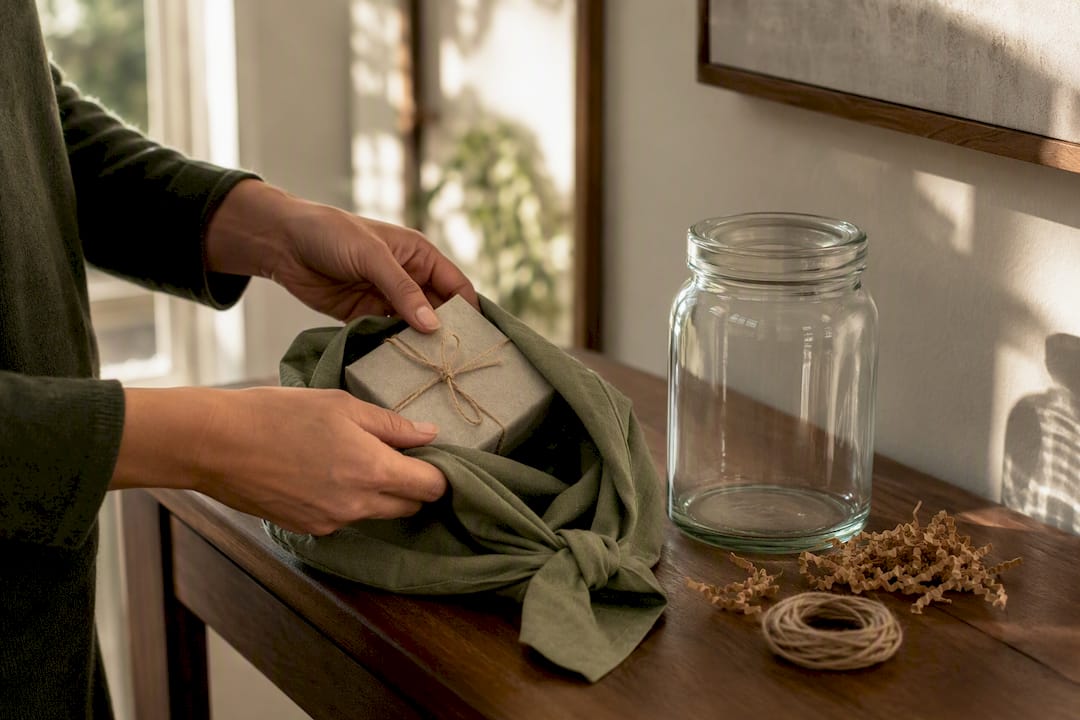
Skip the plastic window boxes. A cloth wrap or a printed kraft box does the job and can double as storage afterward. Tuck in a small card that names the materials and, if you know it, the maker’s story. That single card is what turns a bundle of practical items into a gift someone actually remembers giving.
Pro Tip: Buy the centerpiece item from a local maker or a small studio brand when you can. You get a traceable origin story for the card, and the money stays with someone actually making the thing by hand.
Experience Gifts That Skip the Waste Entirely
Sometimes the most sustainable gift isn’t a thing at all. University sustainability programs consistently point to experiences and memberships as the lowest-waste holiday gifting option available, and for good reason: nothing gets shipped, nothing gets thrown away in six months.
Strong options include:
- A repair cafe voucher or a cooking class built around local ingredients.
- A botanical garden or national park membership.
- A coffee roaster subscription or a household refill service for soap and cleaning supplies.
These work because they trade materials for time, which sidesteps impulse-purchase waste altogether. To present one as a gift, print a simple certificate, pair a booking link with a short story card explaining what it is, and note any scheduling details the recipient needs to redeem it.
Sustainable Packaging: What to Check and What to Avoid
The gift can be perfect and the packaging can still wreck the impression. Packaging choices directly affect how trustworthy a sustainable product feels once it’s actually unwrapped in someone’s hands, so check for recycled or FSC-certified paper, compostable void fill instead of plastic air pillows, and a small card with care and end-of-life instructions.
Skip anything wrapped in excess plastic film, and watch for vague claims like “eco-friendly” with no certification or origin story behind them. A small card noting the maker or the verified impact beats a pile of extra plastic inserts every time.
Pro Tip: If the packaging itself can be reused, say so on the card. A cloth wrap that doubles as a produce bag or a jar that becomes storage gets a second life instead of the recycling bin.
Comparing the Real Impact of Different Eco-Friendly Gifts
Not all sustainable gifts carry equal weight, and it helps to know where your money does the most good before you buy.
Everyday-swap items have the lowest upfront cost and the fastest payoff: a $15 beeswax wrap set replaces hundreds of feet of plastic wrap over a year of use, which makes it the highest-frequency win for the lowest price. Durable and upcycled home goods cost more upfront but avoid replacement purchases for years, so their impact compounds quietly over time rather than showing up all at once. Slow-fashion and material-innovation items, like seaweed-blend apparel or mango-leather goods, carry the most story value per dollar since the materials themselves are the news, but they tend to sit at a higher price point and lower frequency of use than a kitchen swap.
Experience and subscription gifts sit apart from all three because they generate zero manufacturing waste on the recipient’s end. They’re the strongest choice when you’re not sure what physical item someone needs, but they leave nothing tangible behind, which matters if the person genuinely wants an object to keep.
Brand-backed impact programs, tree-planting totals, carbon offsets per order, add a layer worth weighing too. They don’t replace certification, but paired with one, they give you a second, verifiable reason to trust the claim on the box.
Why I Favor Durable, Story-Rich Gifts Over Trend Items
Trend items age out fast. A gift built to last, and paired with a story about where it came from, keeps mattering long after the wrapping paper’s gone. That’s part of why hand-poured soy candles have stuck around as a gift category: 100% soy wax burns clean, the scent options cover almost any taste, and a candle from a line like Stars and Cents, where a real hidden silver coin turns the unboxing into its own small event, gives the recipient something to talk about beyond the scent itself. Match the gift to what the person actually values, not what’s trending, and it’ll land every time.
— Zach
A Candle Gift That Actually Lasts
Most gifts get used once and forgotten. A candle from Stars and Cents gets burned slowly, refilled in memory long after, and in the case of the coin line, unwrapped twice: once for the candle, once for the surprise inside. Every candle is hand-poured with 100% soy wax, which burns cleaner than paraffin and fits the same durability standard the rest of this guide has been pointing toward.

The Money Candles collection hides a real, collectible US silver coin inside every candle, so the gift keeps a lasting value long after the scent is gone, something no seed-paper notebook or bamboo toothbrush can claim. If a coin collector is on your list, pair the candle with a personalized note about the hidden coin for an extra layer of story. Prefer a classic scented candle without the coin surprise? The Stars Only Collection covers that too. Either way, pick a scent, check out, and let the unboxing do the rest of the talking.
Sources
- Woodchuck USA — buy one plant one
- Marine Biological Association — seaweed forests and carbon storage
- 4ocean — plastic-free products leading the way
- WeSupply Labs — effortless unboxing and frustration-free packaging
FAQ
What makes a gift truly eco-friendly?
A gift counts as eco-friendly when it’s durable or repairable, uses low-impact or certified materials, and ships in packaging that’s recycled, compostable, or reusable. Verified impact claims, like tree-planting programs, add extra confidence over vague “green” marketing.
What are affordable eco-friendly gifts under $25?
Beeswax wrap sets, bamboo dish brushes, and reusable cutlery kits all typically land under $25 and directly replace single-use items. These everyday swaps tend to deliver the most waste reduction per dollar spent.
Are candles considered eco-friendly gifts?
Yes, when they’re made from 100% soy wax rather than paraffin, since soy burns cleaner and comes from a renewable crop. Stars and Cents offers hand-poured soy wax candles, including a line with a hidden coin inside for an added surprise.
How do I avoid greenwashed gifts?
Check for a specific certification, like GOTS or FSC, or a traceable origin story rather than a generic “eco-friendly” label with no backup. If a brand can’t name its material source or impact program, treat the claim with skepticism.
What’s a good zero-waste gift idea for a host?
A coconut shell bowl set or a bamboo dish brush kit both fit a host’s kitchen without adding plastic. A hand-poured soy candle also works well since it doubles as home decor and a usable gift.