
The best spring candle scents combine bright citrus or green top notes with soft floral hearts and light, clean bases. Think lilac, freesia and citrus, sea salt and orchid, peony, and cucumber melon. These profiles read as fresh rather than heavy, mimicking the outdoors instead of smothering a room in sweetness. The sections below break down room pairings, buying tips, and burn care so you can pick with confidence.
TL;DR:
- Spring candle scents should feature fresh citrus or green notes paired with soft florals and light bases like musk or cedarwood for an authentic seasonal feel.
- Room placement affects fragrance performance, with larger spaces needing bigger jars or multiple wicks to achieve proper scent throw.
- Proper burn practices, such as allowing the wax to melt to the edges during the first use and trimming the wick, are essential to maintain scent intensity over time.
- Fragrance combinations with green or citrus top notes help prevent floral scents from becoming overly sweet or heavy, keeping them fresh and seasonally appropriate.
- Trends favor coastal-floral hybrids and green, slightly bitter accents over heavy desserts, emphasizing clean, balanced, and nature-inspired profiles.
Table of Contents
- Best Spring Candle Scents for Every Room and Mood
- What Makes a Scent Smell Like Spring: Top, Heart, and Base Notes
- Which Spring Scents Work Best in Which Rooms
- How to Choose a Spring Candle: A Quick Buying Checklist
- How to Burn a Spring Candle So It Actually Smells Like Spring
- Why the Same Candle Smells Different in March Than in December
- How to Make Your Own Spring-Scented Candles at Home
- What’s Trending in Spring Candle Scents This Year
- Why We Lean Toward Balanced, Green Florals
- Find Your Spring Scent at Starsandcents
- Sources
- FAQ
Best Spring Candle Scents for Every Room and Mood
Spring fragrance works because it borrows from the season itself: rain on pavement, cut grass, the first flowers pushing through cold dirt. Retail seasonal lines lean hard into floral and fresh blends like peony, magnolia, lavender chamomile, sea salt blossom, and plumeria, and for good reason. These are common spring fragrance staples because they read as clean and alive rather than dense.
Here’s a curated shortlist of the standout spring candle scents worth tracking down this year.
- Lilac — Powdery and slightly green, lilac smells like a garden two weeks into bloom. Good for bedrooms or reading nooks.
- Freesia and citrus — Sweet floral meets sharp citrus zest. Works well near an entryway to greet guests.
- Sea salt and orchid — Coastal and floral at once, less sugary than beach-themed candles tend to run. A living room staple.
- Peony — Rounded, romantic, slightly fruity. A classic gift pick for Mother’s Day.
- Hyacinth — Deep floral with a green stem underneath. Pairs nicely with a home office.
- Jasmine — Warm and heady in small doses, cloying in large ones. Best in bigger, well-ventilated rooms.
- Gardenia — Creamy and lush, closer to a bouquet than a single bloom. Good for dining rooms during dinner parties.
- Cucumber melon — Watery and cool, the anti-heavy floral. Works in bathrooms and kitchens.
- Bergamot and green tea — Herbal and slightly bitter, calming without being sleepy. A solid desk candle.
- Verbena and citrus — Lemony and crisp with an herbal edge. Great for kitchens.
- Cherry blossom — Light, fruity, faintly powdery. Trend roundups consistently name it alongside lavender, rose, and grapefruit as a top spring pick.
- Green grass and morning dew — The closest a candle gets to smelling like an open window. Best paired with citrus in an entryway.
- Light linen and white musk — Barely there, mostly “clean.” Ideal for bedrooms where you don’t want fragrance competing with sleep.
- Morning Brew Coffee — Not a floral, but its mild, clean base notes work as a grounding counterpoint to sweeter spring florals; Starsandcents makes a version in a 7 oz amber jar that pairs well with a kitchen or home office.
What Makes a Scent Smell Like Spring: Top, Heart, and Base Notes
Every fragrance is built in three layers, and understanding them helps you predict how a candle will actually smell once it’s burning, not just what the label promises.
Top notes hit first and fade fastest. In spring candles, these are usually citrus (bergamot, mandarin) or green accords (cut grass, crushed leaves). Heart notes are the main event, the florals that define the fragrance once the top notes burn off. Lilac, jasmine, and freesia dominate here. Base notes linger longest and ground everything else. Spring candles favor light bases like white musk, cedarwood, or amber rather than the heavy vanilla and spice bases common in fall and winter scents.
A few example combinations show how this plays out:
- Emerald grass and mandarin top notes, lily of the valley and jasmine heart notes, tonka bean and white musk base, a structure Colonial Candle uses in its Spring Growth line.
- Bergamot top, freesia and rose heart, light amber base.
- Green tea top, gardenia heart, cedarwood base.
- Grapefruit top, peony and lilac heart, white musk base.
One detail matters more than people expect: a green or “petrichor” note, the smell of rain hitting dry earth, does a lot of quiet work in keeping florals from tipping into cloying territory. Candle makers lean on this accord specifically to recreate that fresh-air sensation without it smelling like rain gear.
Pro Tip: If a floral candle smells too sweet on paper, look for one blended with a green or citrus top note. That combination is usually what separates a spring-appropriate floral from a summer one.
Which Spring Scents Work Best in Which Rooms
Room size and airflow change how a candle performs just as much as the fragrance itself. A scent that’s perfect in a small bathroom can feel thin and forgettable in an open living room, and vice versa.
- Entryway: Green-citrus blends like verbena or bergamot and green tea. Strong enough to register the moment someone walks in, not so heavy it lingers in coats.
- Living room: Sea salt and orchid or peony. These have enough throw to fill a larger space without turning sickly sweet over a few hours.
- Bedroom: Light linen and white musk, or a soft lilac. You want ambiance, not something that fights with you while you sleep.
- Bathroom: Cucumber melon or a light citrus. Small rooms amplify scent fast, so a lighter profile avoids overwhelming a tight space.
- Kitchen: Verbena and citrus, or Morning Brew Coffee as a non-floral option that won’t clash with cooking smells.
For spring gifting occasions, peony and sea salt and orchid tend to read as universally appealing. Peony works for Mother’s Day, and a coastal floral fits nicely as a housewarming gift when you’re not sure what the recipient’s usual taste runs toward.
How to Choose a Spring Candle: A Quick Buying Checklist
A candle that smells great in the store can still disappoint at home if the wax, wick, or jar size doesn’t match the room. Run through this checklist before buying:
- Fragrance family: Confirm it’s citrus, green, or light floral, not a “spring” candle that’s secretly heavy and sweet.
- Scent throw vs. intensity: Read the description carefully. “Subtle” and “strong throw” mean different things for a small bathroom versus an open living room.
- Jar size for the room: Larger rooms need bigger jars or multiple wicks to get adequate throw.
- Wax type: Soy wax burns cleaner and slower than paraffin, which matters if you’re keeping windows shut during allergy season.
- Wick type: Cotton wicks burn slightly hotter; wood wicks crackle and can throw scent a bit differently.
- Phthalate-free labeling: Worth checking if you’re eco-conscious, since phthalate-free fragrance oils reduce indoor air concerns.
- Reusable jar: A nice bonus once the candle is finished, especially glass or ceramic vessels that double as storage.
How to Burn a Spring Candle So It Actually Smells Like Spring
A candle’s first burn sets the tone for its entire life, and skipping this step is the most common reason people say a candle “lost its scent” halfway through.
- Let the first burn go long. Allow the wax to melt fully to the edges of the jar, not just around the wick. This prevents tunneling, where the candle burns a narrow well down the middle and leaves wasted wax on the sides.
- Trim the wick to about a quarter inch before every lighting. A longer wick creates a bigger flame, more soot, and a mushroomed tip that throws off less scent.
- Keep it away from drafts. Fans, open windows, and air vents cause uneven burning and can blow out the flame’s ability to properly vaporize fragrance oil.
- Store unused candles in a cool, dark place with the lid on to keep the scent from evaporating before you even light it.
Pro Tip: Once a candle is spent, don’t toss the jar. A cleaned-out amber or glass jar makes a solid pen holder, bathroom organizer, or seed-starting pot for spring planting.
Why the Same Candle Smells Different in March Than in December
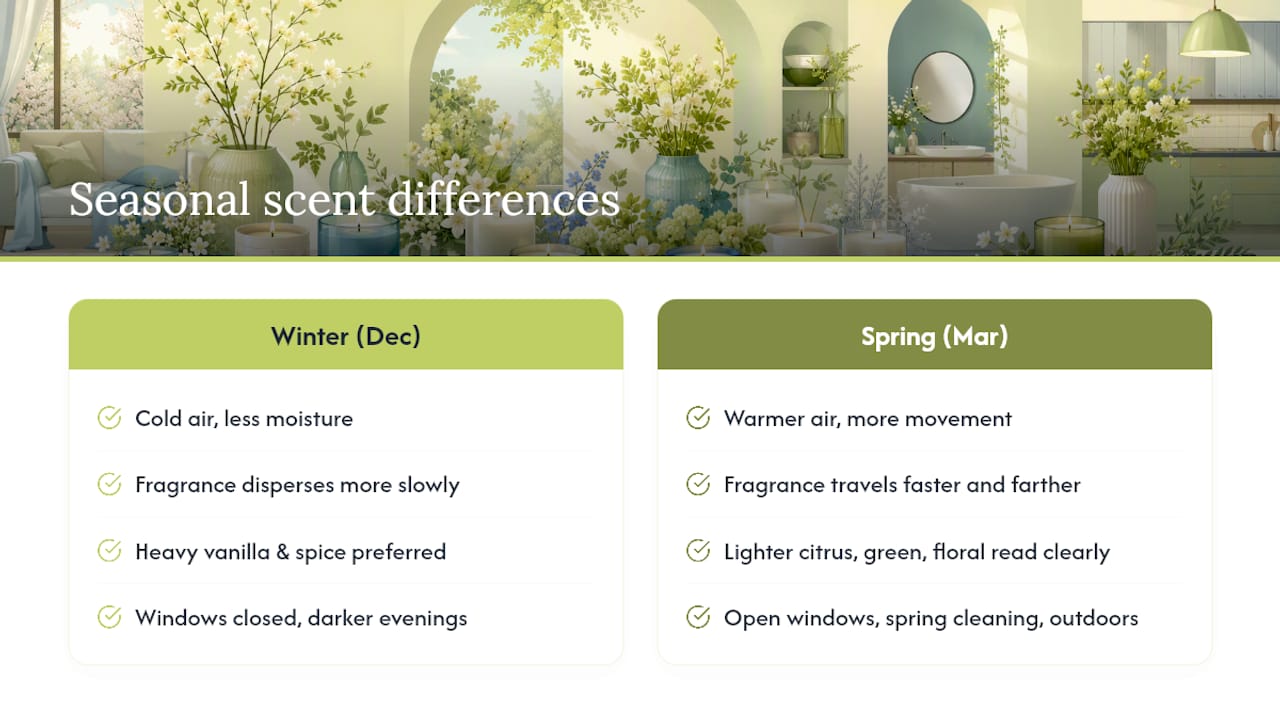
Your nose isn’t static, and neither is the air around it. Cold winter air holds less moisture and tends to make scent molecules disperse more slowly, which is part of why heavy vanilla and spice candles feel so at home in December. Warmer spring air carries fragrance faster and further, so a candle that felt subtle in winter can suddenly seem much stronger once the temperature climbs and windows start opening.
Humidity plays a role too. Spring’s damp, changeable weather actually helps lighter, greener notes read clearly, which is one reason citrus and floral candles perform so well this time of year compared to August, when heat and humidity can make sweet scents feel cloying fast. Fragrance experts point to this shift in daily habits as much as the weather itself. Spring brings open windows, spring cleaning, and more time spent outdoors, and lighter citrus and herbal candles tend to feel more in sync with that mindset than the dense, heavy profiles that make sense on a dark evening in January.
There’s also a psychological piece worth naming honestly: after months of heavier scents, your nose adjusts, and lighter fragrances that would have seemed thin in November can suddenly read as vivid and welcome by March. That’s not just marketing. It’s basic sensory adaptation, and it’s a big part of why a floral that felt underwhelming during the holidays can feel exactly right once the days get longer.
How to Make Your Own Spring-Scented Candles at Home
Making a spring candle at home is a reasonable weekend project if you’re comfortable working with a double boiler and a thermometer. Start with soy wax flakes, which melt at a lower temperature and hold fragrance oil better than paraffin for beginners.
For a spring blend, combine a citrus fragrance oil (bergamot or grapefruit) with a floral oil (lilac or freesia) at roughly a 1:2 ratio, favoring the floral. Most soy wax handles a fragrance load around 6 to 10% of the total wax weight, though it’s worth checking your specific wax supplier’s recommendation since this varies by blend.
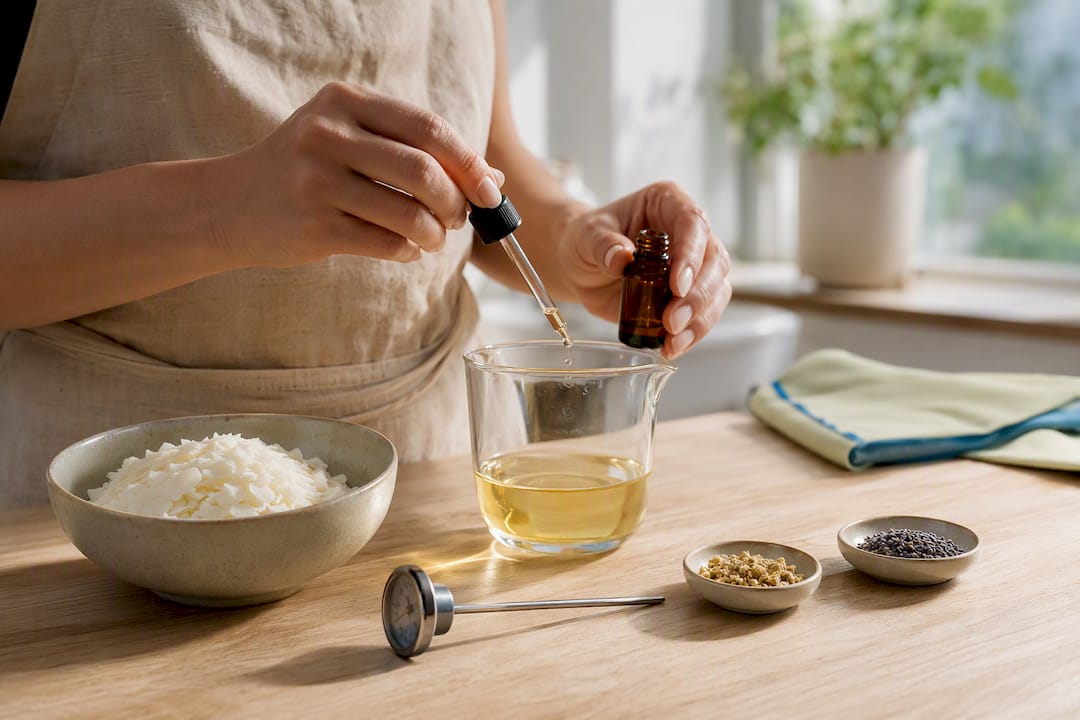
Pour at the temperature your wax instructions specify, usually once it’s cooled slightly from full melt, and let it cure for at least 24 to 48 hours before burning. Curing matters more than most first timers expect. A candle burned too soon after pouring often smells weaker than the same candle burned a few days later, because the fragrance oil needs time to bind fully with the wax. Skipping this step is the single most common reason DIY candles disappoint on the first light.
What’s Trending in Spring Candle Scents This Year
Spring fragrance trends this year lean into scents that feel less like traditional “flower shop” florals and more like specific, memorable moments. Cherry blossom continues to dominate trend lists alongside lavender, rose, jasmine, lemon, and grapefruit, a lineup that several fragrance trend roundups point to repeatedly.
Coastal-floral hybrids are having a real moment too. Brands are increasingly blending sea salt and marine accords with softer florals like orchid, broadening appeal beyond the classic sweet-floral formula and avoiding the overly sugary profiles that dominated a few years back. This pairing shows up in candles, room sprays, and even body care, suggesting it’s less a passing fad and more a genuine shift in what people want spring to smell like.
There’s also a noticeable pullback from very sweet, dessert-adjacent florals in favor of green, slightly bitter accents, think green tea, crushed herbs, and grass notes layered under florals instead of vanilla or caramel. That shift tracks with a broader move toward “clean” home fragrance more generally, where the goal is a candle that smells fresh rather than one that smells like a bakery.
Why We Lean Toward Balanced, Green Florals
Sweet, one-note florals get old fast, and heavy bases feel wrong once the windows are open. The candles that hold up over an entire spring season are the ones with a green or citrus edge cutting through the floral heart, which is why that balance drives most of the picks in this guide. A candle like Sea Salt & Orchid earns its spot here because it hits that fresh, not-too-sweet mark, and the surprise element inside each candle adds extra appeal when buying for someone else.
— Zach
Find Your Spring Scent at Starsandcents
Starsandcents is the alternative to guessing at a big-box candle aisle: every candle is hand-poured in 100% soy wax, and every jar hides a real, collectible US silver coin, so a spring gift comes with an unboxing moment built in.

If the fresh, coastal profile in this guide appealed to you, the Sea Salt & Orchid Money Candle fits that green-floral balance directly, and the Morning Brew Coffee Candle works as a grounding, non-floral option for kitchens and offices. Both come in reusable amber jars, offering a practical bonus after the candle is used up. Browse the full Money Candles collection for the silver-coin lineup, or check the Stars Only Collection for classic hand-poured soy scents without the coin. Pick a scent, place an order, and let the surprise do the rest.
Sources
- Petrichor fragrance oil — CandleScience
- Spring Scents & Fragrance Oils — The Flaming Candle
- 8 Trending Fragrances for Spring Candles — Glassnow
FAQ
What Are Good Scents for Spring?
Bright citrus, green accords, and light florals work best for spring, including lilac, freesia, peony, and sea salt and orchid. These profiles feel fresh rather than heavy, which is why they outperform sweeter, denser winter scents once the weather warms.
What Are the Classic Scents of Spring?
Floral and fresh blends dominate, with peony, magnolia, lavender chamomile, sea salt blossom, and plumeria appearing across most seasonal retail collections. Green or petrichor notes often get layered in to keep these florals from smelling too sweet.
What Fragrance Family Is Best for Spring?
Fresh floral blended with green or citrus top notes reads best for spring, since it mimics open windows and new growth rather than the heavy sweet or spice families common in fall and winter. A light musk or amber base keeps the whole scent grounded without weighing it down.
What Are the Most Popular Candle Scents Right Now?
Lavender, rose, jasmine, cherry blossom, lemon, and grapefruit consistently top fragrance trend lists for spring. Starsandcents’ Sea Salt & Orchid follows the same fresh, floral logic with a coastal twist, and it’s a strong pick if you want something outside the standard rose or lavender lineup.