
Soy candles are made from hydrogenated soybean oil, better known as soy wax, combined with a fragrance oil and a wick, plus small amounts of optional additives. Everything else, from scent strength to burn quality, comes down to how those few ingredients are balanced.
TL;DR:
- Soy wax melting points vary between 120°F and 179°F, affecting the candle’s firmness and suitability for different shapes and containers.
- Blending soy wax with coconut oil or paraffin can enhance scent throw and wax hardness but reduces the purity of the soy product.
- Recommended fragrance load is around 6 to 8 percent, with exceedance above 10 percent typically leading to scent binding issues and soot.
- Label transparency on soy candles should include explicit “100% soy wax,” wick type, and phthalate-free fragrance details for safety and quality assurance.
Table of Contents
- Soy Candle Ingredients Start With Hydrogenated Soybean Oil
- Why Makers Blend Soy Wax With Other Ingredients
- Fragrance Oils: How Much Is Too Much
- Wicks and Other Components That Make Up the Finished Candle
- Soot, Safety, and What the Label Actually Tells You
- A Simple Soy Candle Recipe and Yield Math for an 8-Ounce Jar
- The Different Dyes and Colorants Used in Soy Candles
- Natural vs. Synthetic Fragrance Oils in Soy Wax
- Common Allergens and Safety Considerations in Soy Candle Ingredients
- Is Soy Wax Actually Better for the Environment?
- Certifications and Quality Standards Worth Knowing
- A Publisher’s Perspective: Why Ingredient Standards Aren’t Optional
- Where to Find Candles That Follow These Ingredient Standards
- Sources
- FAQ
Soy Candle Ingredients Start With Hydrogenated Soybean Oil
Soy wax begins as liquid soybean oil. Manufacturers run it through full hydrogenation, a chemical process that adds hydrogen atoms to the oil’s fat molecules and converts it from a liquid into a solid wax at room temperature. Without that step, you’d have salad oil in a jar, not a candle.
The hydrogenation level determines the wax’s melting point, which typically falls between 120°F and 179°F (49°C to 82°C). That range matters more than most buyers realize. A wax on the lower end melts and pools faster, which container candles want. A wax pushed toward the higher end holds its shape better, which is why pillar and freestanding soy candles need a firmer formulation than the soft wax poured into a tin.
Soy wax density runs around 0.9 grams per milliliter, lighter than water, which is part of why yield calculations for DIY batches always come out a little different from what a straight weight-to-volume conversion would suggest.
Candle-making suppliers sell soy wax in a few physical forms:
- Flakes — the most common form for home makers, easy to melt evenly and measure by cup or scoop.
- Pellets — denser and more uniform, often preferred for consistent commercial batches.
- Blocks — less common for soy specifically, more typical of paraffin, but occasionally used in bulk manufacturing.
CandleScience notes that soy wax can be used straight or blended with other waxes, which sets up the next question every maker eventually asks: should it be blended, and with what?
Why Makers Blend Soy Wax With Other Ingredients
Pure soy wax has a reputation for being a little soft and a little quiet on scent throw compared to paraffin. That’s not a flaw so much as a tradeoff, and it’s the reason blends exist.
Coconut oil or coconut wax is the most common softening or scent-boosting addition. A small percentage, added by artisan makers to increase melt pool size and improve scent diffusion, keeps a candle mostly soy while noticeably improving hot throw. This is why you’ll see candles marketed as “coco-soy” blends rather than pure soy.
Paraffin blends, sometimes called parasoy, go a step further. Paraffin melts differently and releases fragrance more aggressively, so adding even 10 to 20 percent can meaningfully boost scent throw.
Beeswax and palm wax blends show up less often but serve a similar purpose, adding hardness and a higher melting point at the cost of soy purity and, with palm, some sustainability concerns depending on sourcing.
Beyond the big blending decisions, small technical additives do quieter work:
- Stearic acid hardens wax and can improve opacity.
- UV inhibitors slow the yellowing and fading candles suffer from light exposure.
- Natural dyes or colorants in tiny amounts for visual appeal without affecting burn.
True 100% soy has no other wax or oil additive beyond fragrance.*
Fragrance Oils: How Much Is Too Much
Fragrance load is the percentage of fragrance oil by weight relative to the wax, and it’s the single biggest lever for scent strength. Most experienced makers land somewhere in the mid single digits, roughly 6 to 8 percent by weight, for a balance between noticeable scent throw and clean, stable burning.
Push past that typical mid-single-digit range and you risk a few predictable problems: fragrance oil that won’t fully bind to the wax, sweating (oily beads on the surface), or a flame that struggles and produces excess soot because it’s essentially trying to burn perfume along with wax.
Fragrance loads above roughly 10 percent are where most soy candle failures start, according to makers who test their own blends across pour temperatures.
Two safety and quality markers matter more than scent strength alone. First, IFRA guidance, the fragrance industry’s safety framework, helps determine safe usage levels for specific fragrance compounds in candles meant to burn indoors. Second, phthalate-free labeling matters because cheaper, unclear fragrance oils can contain phthalates, a class of chemical plasticizers linked to health concerns when burned and inhaled repeatedly indoors.
Pour and cure temperature affect fragrance retention too. Testing fragrance at two pour temperatures, roughly 70°C and 80°C, reveals real differences in cold throw (unlit scent) versus hot throw (scent while burning). If your candles smell great cold but weak once lit, your pour temperature or fragrance load is usually the culprit, not the fragrance oil itself.
Wicks and Other Components That Make Up the Finished Candle
Wax and fragrance get most of the attention, but the wick decides how the candle actually burns.
Cotton wicks are the standard, producing a steady flame with minimal crackle. Wood wicks burn with a gentle crackling sound and tend to throw scent slightly wider, though they need more careful trimming to avoid uneven burning.
- Avoid lead-core wicks entirely. They’ve been phased out of the market for decades but still occasionally show up in imported or unregulated products.
- Zinc-core versus pure cotton-core matters mainly for wick rigidity in larger candles; zinc-core stays more upright in wider jars.
- Sizing rule of thumb: a wick rated for the jar’s diameter, not the candle’s total volume, since it’s the surface melt pool diameter that determines proper burn.
Container material (glass, tin, ceramic) and lid design round out the finished product, but they’re aesthetic and safety choices rather than ingredient decisions.
Soot, Safety, and What the Label Actually Tells You
Soy candles generally burn cleaner and produce less soot than paraffin candles, a real and measurable difference tied to how completely each wax combusts. That said, soy candles don’t purify indoor air or neutralize odors chemically. They mask and add scent; they don’t filter anything.
Reputable label red flags to watch for:
- Vague wording like “soy-based” or “soy blend” without a specific percentage.
- No wick material disclosed on the packaging or product page.
- Fragrance listed only as “fragrance oil” with no phthalate-free claim or safety standard mentioned.
No federal rule forces exact wax composition disclosure, so a “100% soy wax” statement on the label is currently the most reliable signal a shopper has.
Pro Tip: Burn a new candle for the first time in a well-ventilated room and watch the flame for the first 30 minutes. A tall, flickering flame with visible dark smoke usually means the wick is oversized for the wax and jar combination, not a sign the wax itself is unsafe.
A Simple Soy Candle Recipe and Yield Math for an 8-Ounce Jar
Here’s a workable starting formula for one standard 8-ounce jar candle:
- Soy wax: roughly 6.5 to 7 ounces (accounting for fragrance and shrinkage during cooling).
- Fragrance oil: 6 to 8 percent by weight of the wax, so roughly 0.4 to 0.6 ounces for this batch size.
- Wick: a cotton or wood wick sized to an 8-ounce jar’s diameter, typically in the small-to-medium range depending on the specific brand’s sizing chart.
- Pour temperature: wax poured around 120°F to 135°F, with fragrance blended in slightly above that before cooling to pour temperature.
- Cure time: let the finished candle sit for 3 to 7 days before burning to let fragrance fully bind to the wax.
For yield math, nine pounds of soy wax fills roughly ten 16-ounce jars, which works out to about 160 fluid ounces of usable volume. Scale that down and a 10 lb bag of soy wax yields somewhere around eighteen to twenty 8-ounce jar candles, accounting for the fragrance oil volume and normal pour waste.
Quick troubleshooting checklist: sinking or cracked tops usually mean cooling too fast; weak scent throw points to fragrance load or cure time; tunneling down the middle usually means the wick is undersized for the jar.
The Different Dyes and Colorants Used in Soy Candles
Color in a soy candle comes from one of three general sources, and each behaves differently once the wax starts melting.
Liquid dyes, concentrated color formulated specifically for candle wax, are the most common choice among small-batch and commercial makers alike. They mix in easily at low concentrations and don’t cloud the wax the way some alternatives can.
Dye chips or blocks work similarly but come pre-measured into solid chips, which makes them easier to dose consistently across large batches without a scale for color alone.
Natural colorants, derived from plant sources like beet or turmeric extracts, appeal to makers chasing an “all-natural” positioning, but they tend to fade faster under light exposure and can shift the wax’s melt behavior slightly if used in higher concentrations.
The practical impact of color choice goes beyond looks. Dark or heavily pigmented candles can make it harder to see wick trim issues or soot buildup at a glance, which is a small but real safety consideration for anyone monitoring a burning candle. Overloading dye can also interfere with how evenly wax melts, sometimes leaving a slight ring of color separated from the clear melt pool near the wick. Most reputable suppliers cap recommended dye concentrations well below the point where this becomes visible, which is why buying dye specifically formulated for candles, rather than improvising with other coloring agents, matters more than it might seem.
Natural vs. Synthetic Fragrance Oils in Soy Wax
Natural fragrance oils, derived from plant extracts, essential oils, and other botanical sources, appeal to buyers chasing an all-natural product. Synthetic fragrance oils, engineered in a lab to mimic scents that don’t exist in nature or to stabilize natural notes that degrade quickly, dominate the commercial candle market for a practical reason: they’re more consistent and far more affordable to produce at scale.
Compatibility with soy wax is where things get specific. Plant-based fragrance oils formulated for candle use dissolve reliably in soy wax and are generally preferred over straight essential oils for consistent scent throw. True essential oils, while natural, often don’t bind to wax as evenly and can evaporate faster during the curing process, leading to weaker cold throw over time.
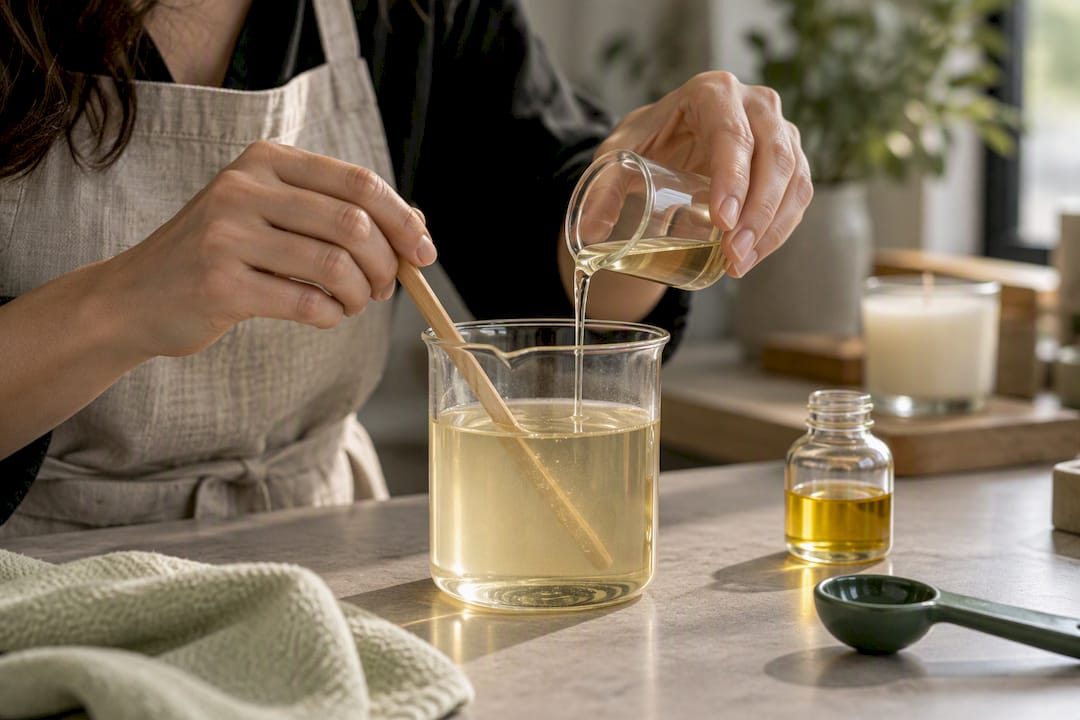
This doesn’t mean synthetic automatically means unsafe. A well-formulated synthetic fragrance oil that meets IFRA guidelines and carries phthalate-free labeling is generally a safer bet than an essential oil blend improvised without testing, because it’s been engineered specifically for stability in wax and safety in combustion. The “natural versus synthetic” question matters less than whether the specific fragrance oil, whatever its origin, was formulated and tested for candle use rather than borrowed from skincare or aromatherapy applications where the safety standards are entirely different.
Common Allergens and Safety Considerations in Soy Candle Ingredients
Soybean-derived products carry an unavoidable question for anyone with a soy allergy: is burning a soy candle a risk? The honest answer is that soy wax is heavily processed and the proteins responsible for allergic reactions are largely removed or altered during hydrogenation, but sensitive individuals should still exercise caution, particularly with unrefined or minimally processed soy wax products.
Fragrance oils present a more common allergen concern than the wax itself. Certain fragrance compounds, particularly synthetic musks and some essential oil derivatives like citrus terpenes, are known to trigger skin or respiratory sensitivity in some people, especially in poorly ventilated rooms. This is a core reason IFRA guidelines exist: they set usage limits for specific fragrance materials based on documented sensitization data, not arbitrary caution.
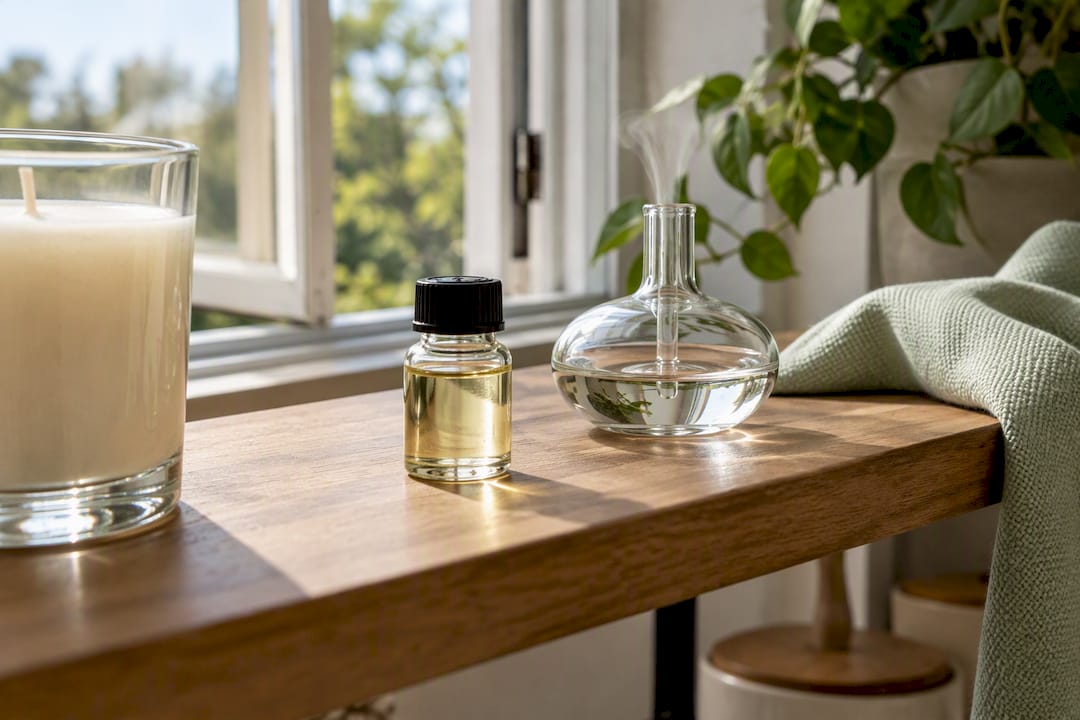
Dye and colorant additives rarely trigger allergic reactions since they’re used in such small concentrations, but anyone with chemical sensitivities should still favor candles with minimal, clearly labeled ingredients over heavily fragranced, deeply colored options.
The most practical safety habit is simple: burn any new candle in a ventilated space the first time, and stop use immediately if you notice headaches, throat irritation, or unusual coughing, which are the most commonly reported reactions tied to fragrance sensitivity rather than the wax itself.
Is Soy Wax Actually Better for the Environment?
Soybean oil is a renewable agricultural crop, which gives soy wax a genuine sustainability edge over paraffin, a petroleum byproduct tied to oil extraction and refining. That’s the honest, defensible claim, and it’s the one worth making without overselling it.
Where the picture gets more complicated is in how the soybeans are grown. Large-scale soy farming, particularly outside the United States, has been linked to deforestation pressure in some regions and heavy reliance on fertilizer and pesticide inputs. American-grown soy, subject to domestic agricultural regulation, generally carries a smaller land-use footprint concern than soy sourced from regions with weaker land management oversight.
Biodegradability is soy wax’s other real advantage. Because it’s a plant-based wax, spilled or leftover soy wax breaks down far more readily than paraffin, and cleanup with hot water and soap is genuinely easier since soy wax doesn’t require petroleum-based solvents to dissolve.
None of this makes soy wax a perfect environmental choice. Hydrogenation is an energy-intensive industrial process, and shipping, packaging, and fragrance oil sourcing all carry their own footprints regardless of the base wax. The fairest summary: soy wax is a meaningfully better raw material choice than paraffin, sourced from a renewable crop rather than a fossil fuel byproduct, but it isn’t a free pass on sustainability across the entire supply chain.
Certifications and Quality Standards Worth Knowing
Unlike food or cosmetics, candle wax doesn’t carry a single mandatory federal certification system in the United States, which is exactly why label language does so much of the work for consumers trying to judge quality.
The closest thing to an industry safety standard is IFRA compliance for fragrance materials, which sets usage limits based on toxicology and sensitization research rather than marketing claims. A fragrance oil supplier that states IFRA compliance is signaling the fragrance was tested against a recognized safety framework, not just assumed safe.
Some soy wax suppliers pursue non-GMO verification for their soybean sourcing, appealing to buyers concerned about genetically modified crop origins, though this remains a supplier-level choice rather than an industry-wide requirement. Kosher certification occasionally appears on wax products as well, reflecting processing standards rather than any candle-specific safety claim.
The most consistently useful standard for shoppers remains simple label transparency: an explicit “100% soy wax” statement, disclosed wick material, and a fragrance oil described as phthalate-free or IFRA-compliant. Suppliers like CandleScience and Crafter’s Choice publish this information plainly for their wax and fragrance products specifically because informed buyers and makers ask for it, and its absence on a retail candle is usually more telling than its presence.
A Publisher’s Perspective: Why Ingredient Standards Aren’t Optional
Fragrance load gets balanced deliberately, favoring a scent that reads clearly without pushing the wax past the point where clean burning suffers. The ingredient standards covered in this guide aren’t abstract shopping advice. They’re the same questions worth asking of any candle before it burns in your home.
— Zach
Where to Find Candles That Follow These Ingredient Standards
If you’d rather skip the flakes, scale, and thermometer and just get a candle made to the standards this guide covers, A reputable candle maker hand-pours every candle from 100% soy wax, listed plainly as such. There is no vague “soy blend” language to decode.

What sets the lineup apart from a typical scented candle purchase is the Money Candles collection, where every candle hides a real, collectible US silver coin inside rather than a token or novelty prize. It’s the same clean-burning soy wax and cotton or wood wick construction described throughout this guide, with an unboxing moment built in. If you want a gift that combines genuine scent quality with a real find at the bottom of the jar, browse the Stars Only Collection of hand-poured soy candles or head straight to the Money Candles page to pick a scent and see which coin might be waiting inside.
Sources
- CandleScience — What is soy wax?
- Wikipedia — Soy candle
- Crafter’s Choice — Differences between soy wax for candle making
FAQ
What Are the Disadvantages of Using Soy Wax in Candles?
Soy wax is softer than paraffin, which can mean weaker scent throw and a lower melting point that struggles in pillar or freestanding candle shapes without additives. It’s also more prone to frosting, a natural white crystalline surface texture, and generally costs more per pound than paraffin.
Are Yankee Candles 100% Soy?
Shoppers specifically wanting a soy candle should check the label for an explicit “100% soy wax” statement rather than assuming any major candle brand uses soy by default.
How Many Candles Does a 10 lb Bag of Soy Wax Make?
A 10 lb bag of soy wax makes roughly eighteen to twenty 8-ounce jar candles, based on the standard yield ratio where nine pounds of wax fills about ten 16-ounce jars. Actual yield varies slightly depending on fragrance oil volume and pour waste.
Are Soy Candles Good or Bad for You?
Soy candles are generally considered a cleaner-burning option since they produce less soot than paraffin candles. They don’t purify or filter indoor air, and the fragrance oil used matters as much as the wax itself, so choosing phthalate-free, IFRA-compliant fragrance is the more important safety factor.
Does Starsandcents Use 100% Soy Wax?
Current prices and available scents are listed on the Money Candles collection page.